How the PlayStation 2 Became the Best-Selling Console of All Time
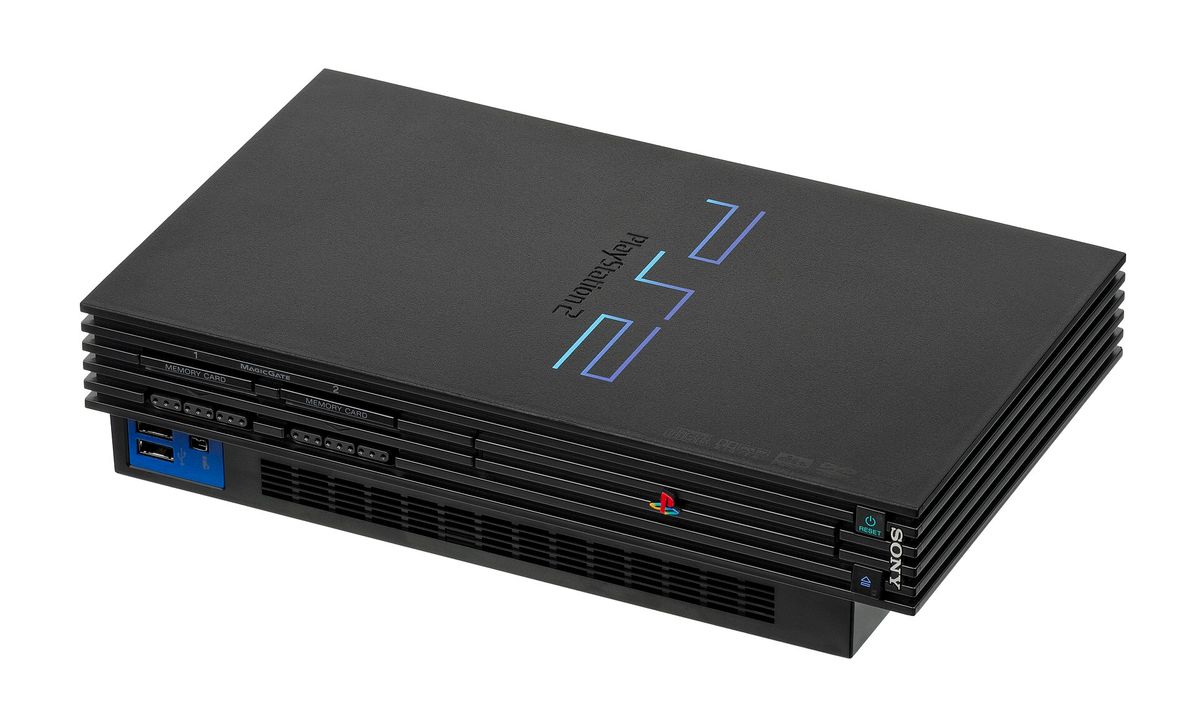
The PlayStation 2 did not simply win its console generation. It became one of the defining entertainment products of the 2000s.
Sony launched the PS2 in Japan on 4 March 2000, followed by North America on 26 October and Europe on 24 November. More than two decades later, Sony puts worldwide sales at over 160 million consoles — an extraordinary figure that still places the PS2 at the very top of gaming history.
But the really interesting question is why.
The PS2 wasn't the most powerful console of its generation. Microsoft's Xbox could outperform it in several areas, Nintendo's GameCube was an extremely capable games machine, and Sega's Dreamcast had beaten Sony to market.
Yet none came remotely close to matching the PS2's reach.
Its success wasn't the result of one killer feature. Sony managed to combine excellent timing, the enormous popularity of the original PlayStation, DVD playback, backwards compatibility, aggressive third-party support, an astonishing game library and an exceptionally long lifespan.
The result was a console that gradually became much more than another games machine.
For millions of households, the PlayStation 2 simply became the console to own.
Sony Already Had a Huge Head Start
The PS2 story really begins with the original PlayStation.
Sony entered the console business as an outsider in the 1990s and proceeded to transform it. The original PlayStation ultimately sold more than 102 million consoles worldwide, establishing an enormous customer base before the PS2 even appeared.
By 2000, PlayStation was no longer the new brand fighting Nintendo and Sega.
It was arguably the biggest name in console gaming.
That mattered enormously.
Millions of players already owned PlayStation games, controllers and memory cards, recognised franchises such as Gran Turismo, Tekken and Final Fantasy, and were familiar with Sony's brand.
The PS2 therefore arrived not as an unknown proposition, but as the eagerly anticipated successor to one of the world's most successful consoles.
Sony had momentum — and then gave existing PlayStation owners another very good reason to upgrade.
Backwards Compatibility Was a Masterstroke
The PS2 could play the vast majority of original PlayStation games.
Today, backwards compatibility is often discussed as an expected feature. In 2000, it was a huge selling point.
Buying a PS2 didn't necessarily mean abandoning the collection you'd built over the previous five years.
You could bring many of those games with you.
That immediately gave the console access to a huge existing software catalogue in addition to its growing PS2 library.
It also reduced one of the biggest psychological barriers to upgrading hardware.
Instead of thinking:
"Do I really want to replace my PlayStation?"
the proposition became:
"Why not buy a PS2 and continue playing my PlayStation games as well?"
Sony itself now highlights backwards compatibility alongside DVD playback, online functionality and new PS2 games as part of the machine's unusually compelling package.
It was an incredibly effective bridge between generations.
The PS2 Was Also a DVD Player
This may be the single most important factor that separates the PS2 launch from most console launches.
The PlayStation 2 didn't just play games.
It played DVD movies.
That was a major deal in 2000.
DVD was rapidly replacing VHS as the desirable new home-video format, but standalone DVD players were still a significant purchase for many families.
Suddenly Sony was offering one box that could play next-generation games, original PlayStation games, CDs and DVDs.
Sony itself describes the combination as particularly attractive because dedicated DVD players could be expensive at the time.
That changed the buying conversation.
A teenager might have wanted a PS2 for Gran Turismo, Tekken or Grand Theft Auto.
Their parents could also look at it as the household's new DVD player.
For some buyers, the movie functionality helped justify spending hundreds on a games console.
And unlike gimmicks added simply to extend a specification sheet, DVD playback was something people genuinely used.
PS2s ended up underneath televisions in living rooms where they served both as games machines and everyday movie players.
Sony had managed to make a console relevant even when nobody was playing a game.
Then Came the Games
None of the PS2's clever hardware features would have mattered much without software.
Fortunately for Sony, the PS2 accumulated one of the most extraordinary libraries ever assembled for a console.
Sony reported in 2011 that more than 10,828 PS2 software titles had been released worldwide across regional catalogues, with more than 1.52 billion units of PS2 software sold.
The sheer breadth was staggering.
Want Open-World Crime Games?
You had:
Racing?
There was:
- Gran Turismo 3: A-Spec
- Gran Turismo 4
- Need for Speed: Underground
- Need for Speed: Most Wanted
- Burnout 3: Takedown
Action and Adventure?
Try:
Horror?
The PS2 generation delivered games including:
Platform Games?
Sony had three major series operating almost simultaneously:
Then add Metal Gear Solid 2, Metal Gear Solid 3, Final Fantasy X, Kingdom Hearts, Persona 3, Persona 4, SOCOM, SSX, TimeSplitters, Tekken, Soulcalibur, Tony Hawk's Pro Skater and hundreds upon hundreds of others.
And that still barely scratches the surface.
PS2 Had Something for Almost Everyone
Perhaps the PS2's greatest software advantage was not simply that it had great games.
It was that it had so many different kinds of games.
There were enormous AAA releases sitting alongside strange Japanese experiments, licensed movie games, football titles, arcade conversions, budget games, RPGs, fighting games, extreme sports games, rhythm games and niche titles that would probably struggle to receive a boxed retail release today.
It meant two PS2 owners could have almost completely different game collections.
One household might own FIFA, Need for Speed and GTA.
Another might play Final Fantasy, Kingdom Hearts and Dragon Quest.
Someone else could spend hundreds of hours with Gran Turismo.
Children had LEGO, Harry Potter, Crash Bandicoot, Spyro and countless licensed games.
More serious players could disappear into Metal Gear Solid, Silent Hill or Shadow of the Colossus.
And eventually the PS2 became home to mass-market experiences such as SingStar, Buzz! and EyeToy games.
The PS2 wasn't aimed at one type of gamer.
It became a platform for almost every type of gamer.
Third-Party Publishers Couldn't Ignore It
Once PS2 hardware sales began accelerating, its success started feeding itself.
More consoles meant a larger potential audience for games.
A larger audience encouraged publishers to prioritise the PS2.
More games made buying the console more attractive.
That attracted more players.
And the cycle continued.
Sony's own first-party output was important, but third-party publishers were arguably even more critical to the system's dominance.
Companies such as Rockstar, Square Enix, Konami, Capcom, Namco, Electronic Arts, Activision and Ubisoft brought major franchises to the machine.
In several cases, games became synonymous with PS2 even when they weren't permanently exclusive.
For a huge chunk of the public, franchises including Grand Theft Auto, FIFA, Pro Evolution Soccer, Need for Speed and Tony Hawk were simply associated with PlayStation.
That was extraordinarily difficult for competitors to overcome.
Grand Theft Auto Changed Everything
Any explanation of PS2's success deserves special mention of Grand Theft Auto.
Grand Theft Auto III arrived in 2001 and helped redefine what players expected from a 3D action game.
Then came Vice City.
And then San Andreas.
These weren't merely successful games. They became cultural events.
The prospect of exploring enormous cities, stealing almost any vehicle, listening to in-game radio stations, taking missions or simply causing chaos gave players a type of freedom that felt revolutionary at the time.
For many teenagers and young adults, owning a PS2 became almost inseparable from owning GTA.
Sony had other system sellers, of course. Gran Turismo 3 was particularly important in the early years; former PlayStation Europe executive Jim Ryan later recalled that the game and its hardware bundles sent PS2 sales soaring in Europe.
That was one of the PS2's strengths: there wasn't just one system seller.
There were waves of them.
Sony Beat Its Rivals Through Scale
The sixth console generation contained excellent hardware.
Sega's Dreamcast was innovative and offered online functionality unusually early.
Nintendo's GameCube delivered outstanding first-party games and compact, capable hardware.
Microsoft entered the business with Xbox, offering considerable power, an internal hard drive and what would eventually become the enormously influential Xbox Live service.
Yet none achieved anything close to PS2's hardware sales.
Part of the reason was timing.
The Dreamcast arrived before the PS2 but could not maintain sufficient commercial momentum, with Sega ultimately leaving the console hardware market.
GameCube and Xbox didn't arrive until after PS2 had already begun establishing itself internationally.
By March 2001, Sony had already shipped 10 million PS2 systems. By October that year it had reached 20 million. The figure climbed to 30 million in May 2002, 40 million that September and 50 million by January 2003.
Once those numbers began piling up, competitors faced an increasingly difficult battle.
The PS2 was everywhere.
Your friends had one.
Game shops devoted enormous amounts of shelf space to it.
Publishers supported it.
Second-hand games were plentiful.
Accessories were everywhere.
And prices gradually fell.
Network effects had taken hold.
The PS2 Slim Gave the Console Another Life
Sony also refused to let the hardware stand still.
In late 2004, the company introduced the dramatically smaller PS2 Slim.
It was thinner, lighter and much easier to fit into an entertainment setup. It also incorporated an Ethernet port, making network play more convenient.
The redesign did something console revisions often do extremely well: it made an established system feel new again.
Existing owners had an attractive replacement or second-console option.
New buyers received smaller and more mature hardware.
Retailers had something fresh to promote.
And by this point the PS2 already had an enormous back catalogue waiting for anyone buying their first system.
The combination of cheaper hardware and inexpensive older games made the PS2 increasingly appealing to families and more price-sensitive customers.
Its Price Kept Falling
Another reason PS2 reached such extraordinary numbers was that Sony kept selling it long after the initial generation had passed its peak.
By April 2009, Sony reduced the PS2's US recommended retail price to $99.99.
Think about where gaming was by then.
The PlayStation 3 had already been available for years.
The Xbox 360 was established.
Nintendo's Wii was a worldwide phenomenon.
Yet Sony was still actively selling new PS2s.
That allowed the console to reach consumers who weren't necessarily interested in paying new-generation prices.
The PS2 effectively moved through different markets during its lifetime.
It began as an expensive, highly desirable next-generation machine.
It ended as a cheap, mature console with an enormous library of affordable games.
Both stages sold hardware.
Its Lifespan Was Remarkable
The PS2 didn't disappear when the PlayStation 3 arrived.
It carried on.
And on.
And on.
Sony announced in January 2011 that the console had passed 150 million sales, nearly eleven years after its Japanese launch.
Worldwide hardware production finally ended in early 2013, almost thirteen years after the system first appeared.
Even more remarkably, software was still arriving.
Guinness World Records lists Pro Evolution Soccer 2014, released in November 2013, as the final PS2 game release in its accounting of the platform's lifespan.
A console launched when DVD was still an exciting new technology was receiving software in a world of smartphones, tablets, the PS4 and Xbox One.
Few gaming systems have ever demonstrated that kind of staying power.
The PS2 Became Bigger Than the Hardcore Gaming Audience
This is perhaps the most important explanation for the final sales figure.
The PS2 escaped the traditional gaming bubble.
Plenty of people who would never describe themselves as dedicated gamers owned one.
Some bought it to play FIFA.
Some bought it for SingStar at parties.
Some wanted GTA.
Some wanted Gran Turismo.
Some families bought one partly because they needed a DVD player.
Some children inherited a PS2 after an older sibling upgraded.
Others picked up the cheaper Slim years after launch.
The machine crossed age groups, genres and levels of enthusiasm.
Sony wasn't selling only to people who closely followed the games industry.
It was selling a mainstream household entertainment product.
That is how enormous numbers become possible.
Was the PS2 Actually the Best Console of Its Generation?
Technically?
Not in every respect.
Xbox offered stronger hardware in many areas.
Dreamcast had pioneered features before PS2.
GameCube produced exceptional visuals and featured Nintendo's extraordinary first-party catalogue.
Online gaming was also never as centralised or seamless on PS2 as Xbox Live eventually became on Microsoft's machine.
But console generations aren't won on technical specifications alone.
Sony had the combination that mattered:
brand + price + timing + DVD + backwards compatibility + games + developer support + longevity.
No single competitor managed to match the entire package.
That is why examining PS2 merely through its processor or graphics capabilities misses the point.
Its advantage wasn't having one overwhelming feature.
Its advantage was having almost everything consumers needed at exactly the right time.
Over 160 Million Consoles Later
Sony's official PlayStation history now credits the PS2 with more than 160 million consoles sold worldwide.
The number is astonishing, but it makes more sense when you look at everything that happened during those thirteen years.
The PS2 inherited a huge audience from the PlayStation.
It allowed those players to keep using many of their existing games.
It arrived just as DVD was transforming home entertainment.
It received blockbuster after blockbuster.
It enjoyed huge third-party support.
Its price dropped.
Its hardware became smaller.
Its game library became enormous.
And instead of disappearing as soon as the next PlayStation arrived, it stayed on shelves for years.
The PlayStation 2 didn't need to be the most powerful console ever made.
It was the right console, with the right games, at almost exactly the right moment.
And by the time its remarkable run finally ended, Sony hadn't just won a console generation.
It had created the best-selling games console the industry had ever seen.
Explore the PS2 Archive
Dig deeper into the machine and its library: browse the full PS2 games catalogue, read our ranked list of the 100 best PS2 games, check the PlayStation 2's technical specifications, or browse the original PS2 FAQs preserved from the era.