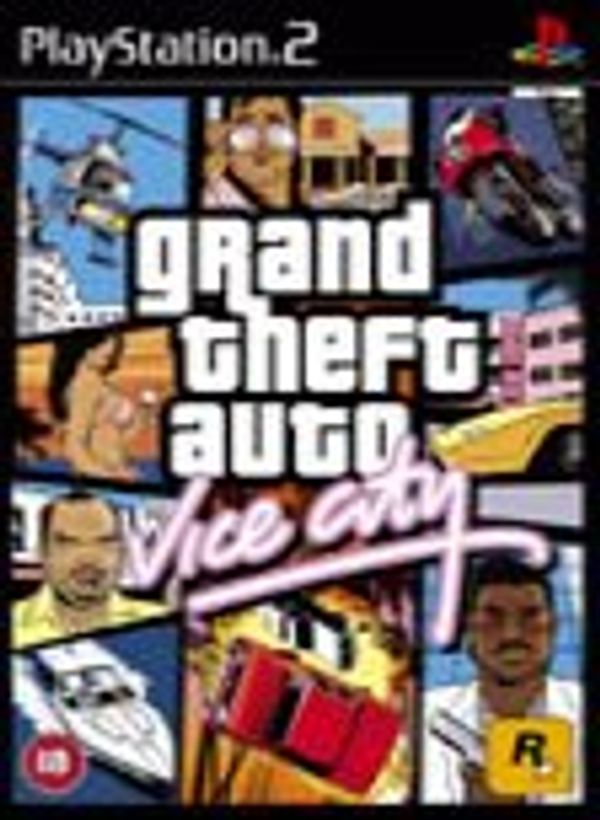
Grand Theft Auto: Vice City
About Grand Theft Auto: Vice City
From the archive
This is the original PS2Home fact sheet for Grand Theft Auto: Vice City, preserved from the early-2000s archive. Details reflect the PAL release as catalogued at the time.
Official fact sheet
Having just made it back onto the streets of Liberty City after a long stretch in maximum security, Tommy Vercetti is sent to Vice City by his old boss, Sonny Forelli. They were understandably nervous about his re-appearance in Liberty City, so a trip down south seemed like a good idea. But all does not go smoothly upon his arrival in the glamorous, hedonistic metropolis of Vice City. He’s set up and is left with no money and no merchandise. Sonny wants his money back, but the biker gangs, Cuban gangsters, and corrupt politicians stand in his way. Most of Vice City seems to want Tommy dead. His only answer is to fight back and take over the city himself.
From the decade of big hair, excess and pastel suits comes a story of one man’s rise to the top of the criminal pile as Grand Theft Auto returns to the PlayStation?2 computer entertainment system this October. Vice City is a huge urban sprawl ranging from the beach to the swamps and the glitz to the ghetto, and is the most varied, complete and alive digital city ever created. Combining non-linear gameplay with a character driven narrative, you arrive in a town brimming with delights and degradation and are given the opportunity to take it over as you choose.
- As a major gateway to South America and the Caribbean and attracting migrants, Vice City is brimming with diverse characters, so there’s a friend for everyone. It is a sociable place and the new guy in town is sure to meet all manner of friendly people in the sunshine capital of America. Athletes, pop stars, real estate developers, politicians, trailer trash, everyone is moving to Vice City to find out what makes it the number one growth city in America. But, as Tommy quickly finds out, trust is still the rarest of commodities.
- Vice City offers vehicular pleasures to suit every taste. For the speed enthusiast, there’s high-performance cars and motorbikes. For the sportsman, a powerboat or a golf buggy lets you enjoy the great outdoors. For those that need that sense of freedom and escape, why not charter a helicopter and see the beauty of Vice City from the air?
- As the party capital of America, you would expect your ears to be seduced by a host of sultry melodies and pumping beats, but the city is truly rocking. You’ll be AMAZED as you sweep the through Vice City’s FM dial. If you are feeling like trouble, you can tune into some driving rock, or some crucial electro, or maybe you want to slow down with some sweet soul, and there will always be some great romantic anthems if you want to really take your mind off things.
- For the action man, or outdoors type, there’s tons of fun things to do and adventures to be had? guaranteed. For the secretive or creepy type, Vice City is full of surprises, a place where you’ll constantly be surprised by the vivacious, fun-loving types who live there and the things you can discover.
Grand Theft Auto: Vice City was Rockstar North’s 2002 follow-up to Grand Theft Auto III, built for the PlayStation 2 and published by Rockstar Games. It moved the series from Liberty City to a fictionalised 1986 Miami, where former mob enforcer Tommy Vercetti arrived to recover the money and drugs lost in a disastrous deal. What began as a job for Sonny Forelli became a campaign to control the whole city. In Britain, the PAL release arrived on Friday, 8 November 2002, at a reported launch price of £39.99.
Story and setting
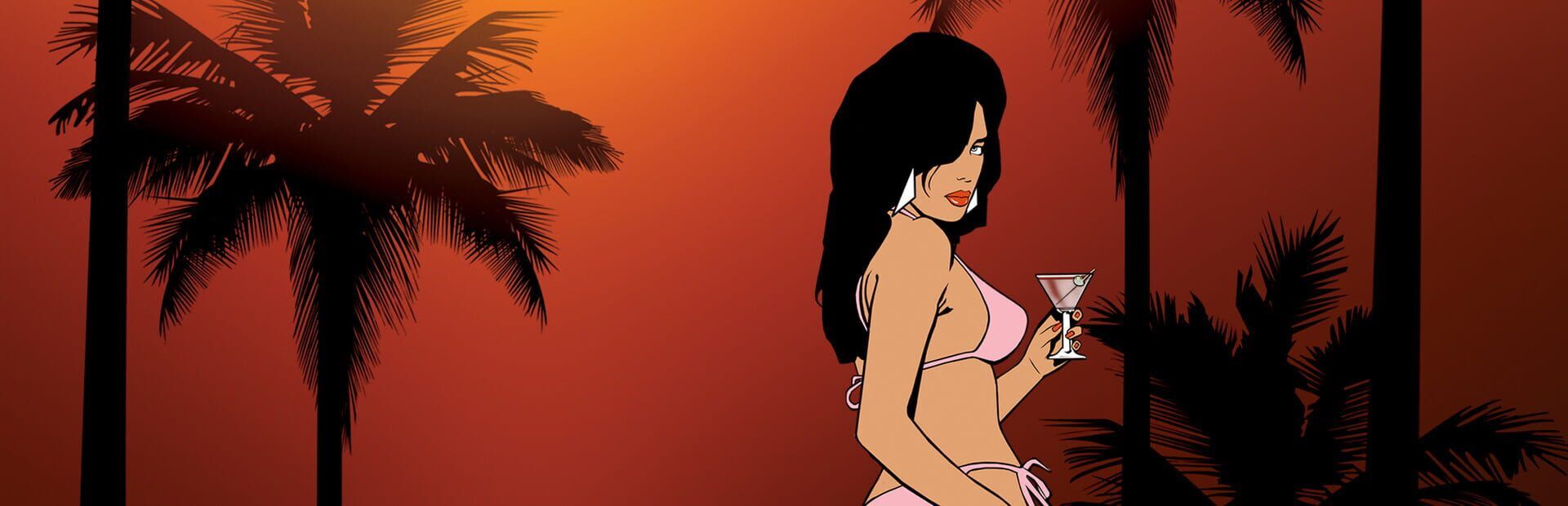
Vice City presented a deliberately exaggerated version of 1980s Miami, divided between bright beaches, hotels and nightclubs, poorer districts, industrial areas and swamps. Its pastel suits, neon, sports cars, corrupt officials and boastful criminals drew on the decade’s crime films and television, particularly the world associated with Miami Vice and Scarface, while the writing constantly undercut the glamour with absurdity and dark comedy.
Tommy Vercetti, voiced by Ray Liotta, was a more defined protagonist than Grand Theft Auto III’s silent Claude. After fifteen years in prison, Tommy was sent south by the Forelli family to establish a drug operation. When the deal was ambushed, he had to identify the traitors, repay Sonny Forelli and build his own criminal empire. The supporting cast included Lance Vance, Ken Rosenberg, Ricardo Diaz, Avery Carrington and a succession of gang leaders, businessmen and local eccentrics.
How it played
The game remained a third-person, single-player open-world action adventure. Players could follow the main storyline, accept jobs from different contacts or simply roam the city, stealing vehicles, fighting rival gangs, evading the police and causing trouble. Cars and boats returned from Grand Theft Auto III, joined by motorbikes, helicopters and a seaplane. Tommy could crouch, dive from moving vehicles, use a broader selection of firearms and melee weapons, and enter more buildings than before.
Vice City’s missions were more varied and theatrical than those in its predecessor, ranging from conventional robberies and assassinations to property sabotage, motorcycle stunts, remote-control vehicles, aircraft work and elaborate escapes. Purchasing businesses and other properties opened new missions and eventually generated income, giving the campaign a clearer sense of progression. Taxi, vigilante, ambulance, fire-fighting and pizza-delivery activities provided optional diversions, while the radio stations supplied a large licensed 1980s soundtrack alongside satirical talk shows and adverts.
The game used RenderWare technology and pushed the PlayStation 2 hard with a busy, streaming city. It looked cleaner and more colourful than Grand Theft Auto III, but the hardware still produced noticeable loading pauses, occasional frame-rate drops, awkward camera behaviour and pedestrian or police artificial-intelligence problems. Those rough edges were part of the original experience rather than faults introduced by later emulation.
PAL and UK release
Take-Two’s release announcement confirmed that Vice City would reach Europe on 8 November 2002, following its North American launch on 29 October. The UK version was a PAL PlayStation 2 release, published under the Rockstar Games label through Take-Two’s European operation. Contemporary UK coverage listed the PlayStation 2 price as £39.99.
The original British release was classified BBFC 18. PEGI was not the UK classification shown on that 2002 release, and ELSPA should not be treated as its UK age rating. A PlayStation 2 Memory Card, normally the standard 8 MB card, was required to save progress. The game had no network or split-screen mode: it was designed as an offline single-player title.
Reception
Vice City was received as a major refinement of Grand Theft Auto III rather than a wholly different game. Reviewers praised its more distinctive setting, mission variety, radio soundtrack, voice cast and the stronger characterisation of Tommy Vercetti. GameSpot awarded the PlayStation 2 version 9.6 out of 10, while The Guardian gave it four out of five and highlighted the freedom to follow missions or simply explore and cause trouble.
The reservations were consistent across contemporary reviews. The basic driving, shooting and wanted-level structure remained close to Grand Theft Auto III, while long missions could be frustrating to repeat. Reviewers also noted blurry textures, technical glitches, frame-rate slowdowns, limited artificial intelligence and troublesome camera angles. Even so, the combination of atmosphere, scale and freedom made it one of the defining PlayStation 2 releases of its period.
Legacy and versions
Vice City became a landmark of the early 2000s open-world format. It showed how a familiar game structure could be transformed by a strong period setting, a memorable soundtrack and a more personal central character. In Britain, GameSpot reported that more than 250,000 copies were sold during the first two days, making it the fastest-selling UK game at that time. Its reputation has endured, although some players now find the gunplay, camera and mission checkpoints noticeably dated.
The original PS2 game was later followed by PC, Xbox and other versions, as well as a separate PS2 Classic release for PS4. Rockstar’s 2021 Grand Theft Auto: The Trilogy – The Definitive Edition brought Vice City to PS4 and PS5 with modernised controls, upgraded presentation and other technical changes. That edition is not the original PAL disc, and the original PlayStation 2 version remains the reference point for the game as it was experienced in 2002.
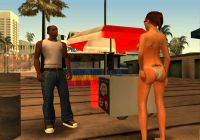
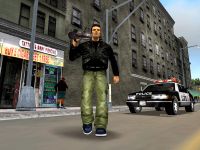
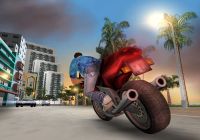
Screenshots (05 Sep-2002)
Artwork
Videos
Frequently asked questions
Does the original Grand Theft Auto: Vice City PS2 disc work on PS5?
No. PlayStation 5 does not play PlayStation 2 discs. To play Vice City on current Sony hardware, use a separately released digital or modern remastered version rather than the 2002 disc.
Is the UK PS2 version of Vice City rare?
Ordinary UK copies are not generally rare because the game was a major mainstream release and later received a Platinum reissue. Complete copies with the original manual and map are more desirable, but asking prices vary and do not establish a fixed market value.
Do you need a PS2 memory card to save Vice City?
Yes. The PS2 game requires a compatible PlayStation 2 Memory Card for saving, with the standard 8 MB card being the normal period accessory.
Is the Definitive Edition the same as the original PS2 version?
No. The Definitive Edition is a later adaptation with revised controls, higher-resolution presentation and other technical changes. The original PS2 release has the visuals, handling and soundtrack presentation associated with the 2002 version.
What is the UK age rating for Grand Theft Auto: Vice City?
The original UK release was rated BBFC 18. PEGI 18 listings found on later databases should not be used as a substitute for the British classification printed on the original UK release.