PS2 Slim: The Smaller PlayStation 2 Explained
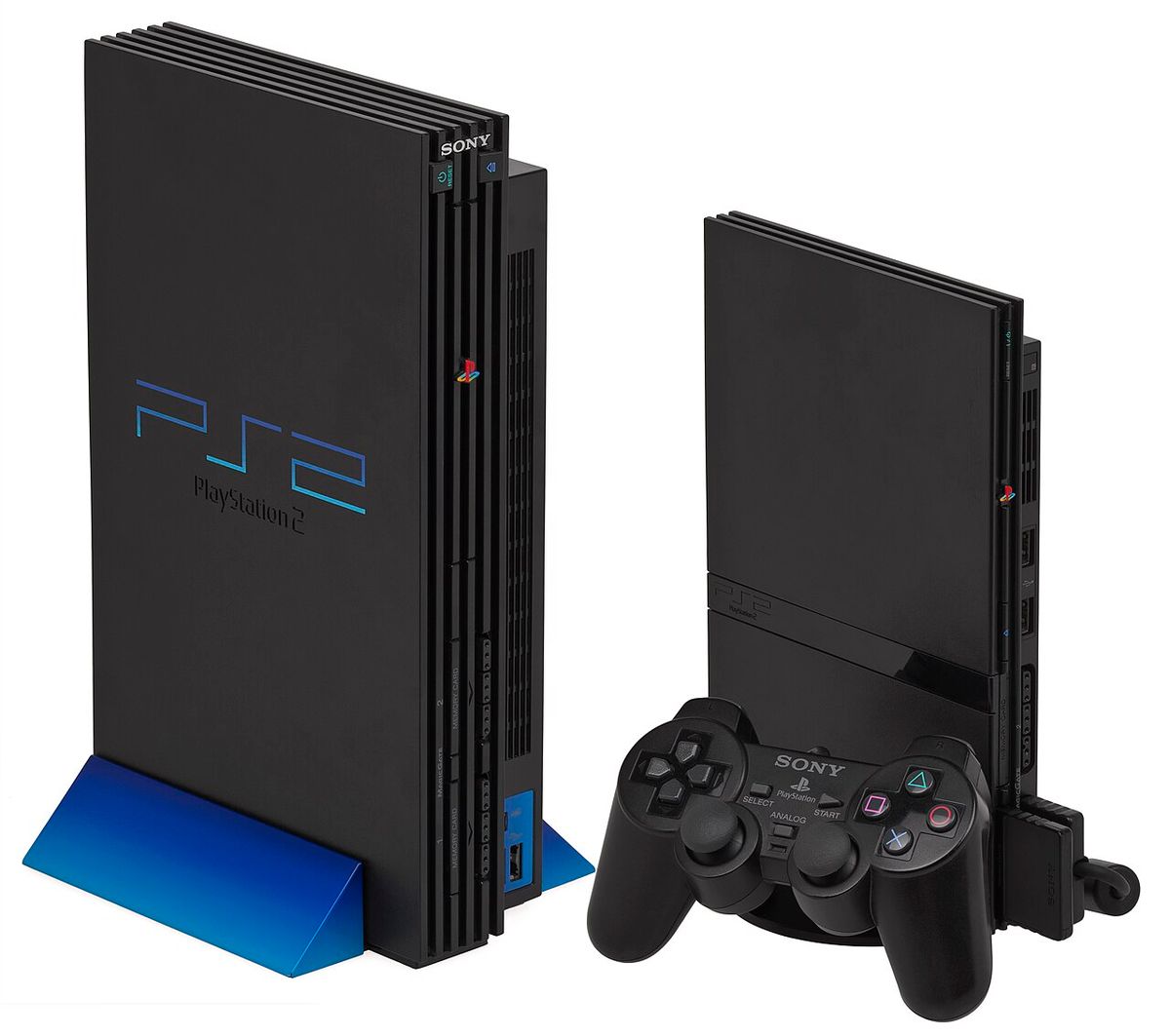
In October 2004, four years after the original launch, Sony replaced the PlayStation 2 with a model 75% smaller: the PS2 Slim. Officially it was just "the new PS2" (SCPH-70000 series), but everyone called it the Slim — and it went on to sell tens of millions of units, outliving the fat model entirely and staying in production until 2013. This is the complete guide: what's different, what the model numbers mean, and which one you should buy today.
What Is the PS2 Slim?
The Slim is the same PlayStation 2 squeezed into a book-sized chassis — 23 × 15 × 3 cm, under a kilogram, thin enough to tuck behind a TV. Inside it's the same Emotion Engine, same Graphics Synthesizer, same 32MB of RAM: every PS2 game plays identically on it. What changed was the engineering — integrated power management, a much smaller motherboard, and several features that had been bolt-on accessories folded into the base unit.
Fat vs Slim: The Differences That Matter
| Fat (SCPH-30000–50000) | Slim (SCPH-70000–90000) | |
|---|---|---|
| Size | 30 × 18 × 8 cm, ~2.2 kg | 23 × 15 × 3 cm, ~0.9 kg |
| Disc loading | Motorised tray | Top-loading flip lid |
| Power supply | Internal | External brick (until 90000 series) |
| Network | Add-on Network Adaptor required | Ethernet built in |
| Hard drive | Yes — expansion bay + Network Adaptor HDD | No HDD support at all |
| Optical audio out | Yes | Yes |
| IR remote receiver | 50000 series only | Built in from day one |
| Noise | Audible fan | Much quieter |
| Modem | On Network Adaptor | Removed (broadband-only era) |
The headline trade: the Slim gained built-in Ethernet and an IR port but lost the expansion bay — meaning no official HDD support, which killed compatibility with Final Fantasy XI (the only game that required the hard drive) and complicated the original HDLoader homebrew scene, which later pivoted to USB and network loading via OPL.
The Model Numbers Decoded
Every Slim carries an SCPH-7xxxx or 9xxxx badge on the bottom:
- SCPH-700xx: the launch Slim (2004). External PSU, top-loading lid. Early units had a brief overheating scare with the ribbon power connector — long since sorted.
- SCPH-750xx: 2005 refresh — quieter laser mechanism, slightly revised internals.
- SCPH-770xx: 2006 revision.
- SCPH-790xx: 2007 revision — reduced chip count, even lighter.
- SCPH-900xx: the final revision (2007–2013). The power supply moved back inside (no more external brick) — but its new BIOS (v2.30) blocked the classic FreeMcBoot exploit, so softmodding needs FreeMcBoot 1.965+ or a different entry point.
The last two digits are the region: 70001/90001 = North America, 70002/90002 = Australia, 70003/90003/90004 = Europe/UK, 70000/90000 = Japan. Slims also came in satin silver and ceramic white — the white 70000-series Slim bundled with a matching white DualShock 2 is the collector favourite.
What the Slim Added
- Built-in Ethernet: online play out of the box — no £30 Network Adaptor needed. This is the big one; it arrived just as SOCOM and the PS2's online scene peaked.
- IR receiver: the DVD remote that needed a port-blocking dongle on fats worked natively.
- Silence: the Slim's tiny fan and external power brick make it near-silent — a fat PS2 under load is noticeably louder.
- Space: it fits where a fat never could. Top-loading also means no tray mechanism to fail.
What It Lost
- The expansion bay and HDD: no internal hard drive — Final Fantasy XI can't run on a Slim, and official PS2 Linux is fat-only.
- Internal PSU (70000–79000): the external brick is one more thing to lose — check it comes with any second-hand Slim.
- The satisfying tray: the flip lid is functional, not theatrical.
The 90000 Series and FreeMcBoot
One quirk buyers should know: 90000-series Slims shipped with BIOS v2.30, which patched the memory-card exploit early FreeMcBoot versions used. Modern FreeMcBoot (1.965 onward) works around it, but an old pre-1.9 FreeMcBoot memory card won't boot on a 9xxxx. If you're buying a Slim specifically for homebrew, a 70000–79000 model is the path of least resistance — or just use a current FreeMcBoot install.
Fat or Slim — Which Should You Buy Today?
- Buy a Slim if: you just want to play games — it's smaller, quieter, more reliable (less heat stress), has Ethernet built in, and the top-loader has fewer moving parts. For 95% of people it's the right console.
- Buy a fat if: you want the internal HDD experience (OPL from a hard drive is still the best way to run ISOs on real hardware), you specifically need Final Fantasy XI, or you just prefer the original's monolithic look.
Prices are similar — £40–80 for either in decent nick — so it genuinely comes down to the HDD question. Either way you get the same 4,000-game library; our complete PS2 guide covers the full hardware story, and the launch history explains how we got from the 2000 original to the machine Sony was still selling in 2013.