ICO
About ICO
From the archive
This is the original PS2Home fact sheet for ICO, preserved from the early-2000s archive. Details reflect the PAL release as catalogued at the time.
Official fact sheet
He was born with horns. For this, they feared him. At first, he was ostracized. Then he was entombed. Then he was forgotten. Only, one day, he escaped his burial crypt. In the outside world, he found himself within a castle, and within that castle he found a peculiar girl. Her name is Yorda. His name is Ico. And the castle had no name, nor did it have an exit or an explanation of its existence…only dangers and menacing spirits.
So begins ICO, the captivating adventure game for the PlayStation 2. In this haunting world, drawn with astounding visual detail and breathtaking style unlike any game you?ve seen before, Ico must lead the way through the catacombs and windswept ramparts of this strange castle. He’ll leap over precipices and battle back shadow wraiths and ethereal creatures with a swing of his walking staff, but his real weapon against the unreal forces in his way is the beautiful and curious Yorda, whose unexplained powers are always the surprise and wonder. But with so many mysteries in their quest, the one daunting question always remains: is there ever a way out of this strange place? Find out for yourself in the adventure of ICO.
- Deep, mysterious storyline that will captivate you for hours
- Variety of puzzles ranging from simple mazes to complex brain twisters
- Inviting and vibrant worlds, each with its own architectural style
- More than 35 complex and visually stunning levels
- Brilliant interactive backgrounds with spectacular lighting effects
ICO was a minimalist action-adventure for PlayStation 2, created by Sony Computer Entertainment Japan’s Team Ico under director Fumito Ueda. It was released in Japan in December 2001, followed by North America in September 2001 and Europe on 22 March 2002. In Britain it arrived as a Sony Computer Entertainment Europe release at a time when most large console adventures were built around combat, statistics and lengthy cut-scenes. ICO instead made atmosphere, environmental puzzles and the bond between two vulnerable characters its main concerns. It was not an RPG, despite occasional database classifications to that effect. There are no character levels, experience points or equipment systems in the conventional role-playing sense. ICO was a single-player, third-person adventure with platforming, light combat and carefully staged puzzles, remembered for its quiet presentation, striking castle setting and unusually direct treatment of companionship.
Story and setting
Ico is a boy born with horns, an omen that leads his village to condemn him. A group of warriors takes him by boat and horseback to a vast, abandoned castle, where he is sealed inside a stone coffin to be sacrificed. A tremor breaks the coffin open and leaves Ico free to explore the castle alone.
He soon finds Yorda, a pale captive girl imprisoned in a high chamber. She speaks a different language, and their inability to communicate clearly becomes part of the story rather than a problem to be solved immediately. Ico frees her and tries to lead her out, while shadow creatures repeatedly emerge from the castle to drag her away. The pair eventually reach the bridge to the outside world, where the Queen destroys the crossing and Ico falls into the depths.
Ico survives and returns to the upper castle, finding a magic sword capable of destroying the shadows. He discovers that Yorda has been turned to stone, confronts the Queen and learns that she intends to preserve herself by taking possession of her daughter’s body. Ico kills the Queen, but the castle collapses, breaking his horns and knocking him unconscious. The Queen’s spell ends; a shadowy Yorda carries Ico to a boat and sends him to the shore. He wakes to find the castle in ruins and Yorda, restored to human form, washed up nearby.
How it played
The castle was explored from a third-person viewpoint through fixed, cinematic camera angles that framed rooms and courtyards like carefully composed film shots. Progress depended on observing the surroundings, then jumping, climbing, pushing, pulling and activating machinery to open a route onwards. The game rarely announced its solutions, but its architecture generally gave enough visual information for a patient player to work them out.
Yorda was central to the design. Ico could take her by the hand, call her to follow or leave her waiting while he created a safe route. She could not climb or jump as capably as Ico, so many puzzles involved arranging platforms, bridges, switches and lifts around her limitations. Shadow creatures provided the main danger. Combat was deliberately simple, usually involving a single weapon and straightforward attacks, and the real tension came from trying to keep Yorda safe rather than mastering a deep fighting system. The game had almost no conventional interface, reinforcing its sense of place and keeping attention on the castle.
The UK and PAL release
The European version was released in Britain on Friday, 22 March 2002, published by Sony Computer Entertainment Europe. Its recorded UK launch price was £39.99. The original PAL release carried an ELSPA 3+ rating, not PEGI 12. A later 2006 PAL reprint is recorded with a PEGI 7+ rating, which helps explain the conflicting age classifications found in modern databases.
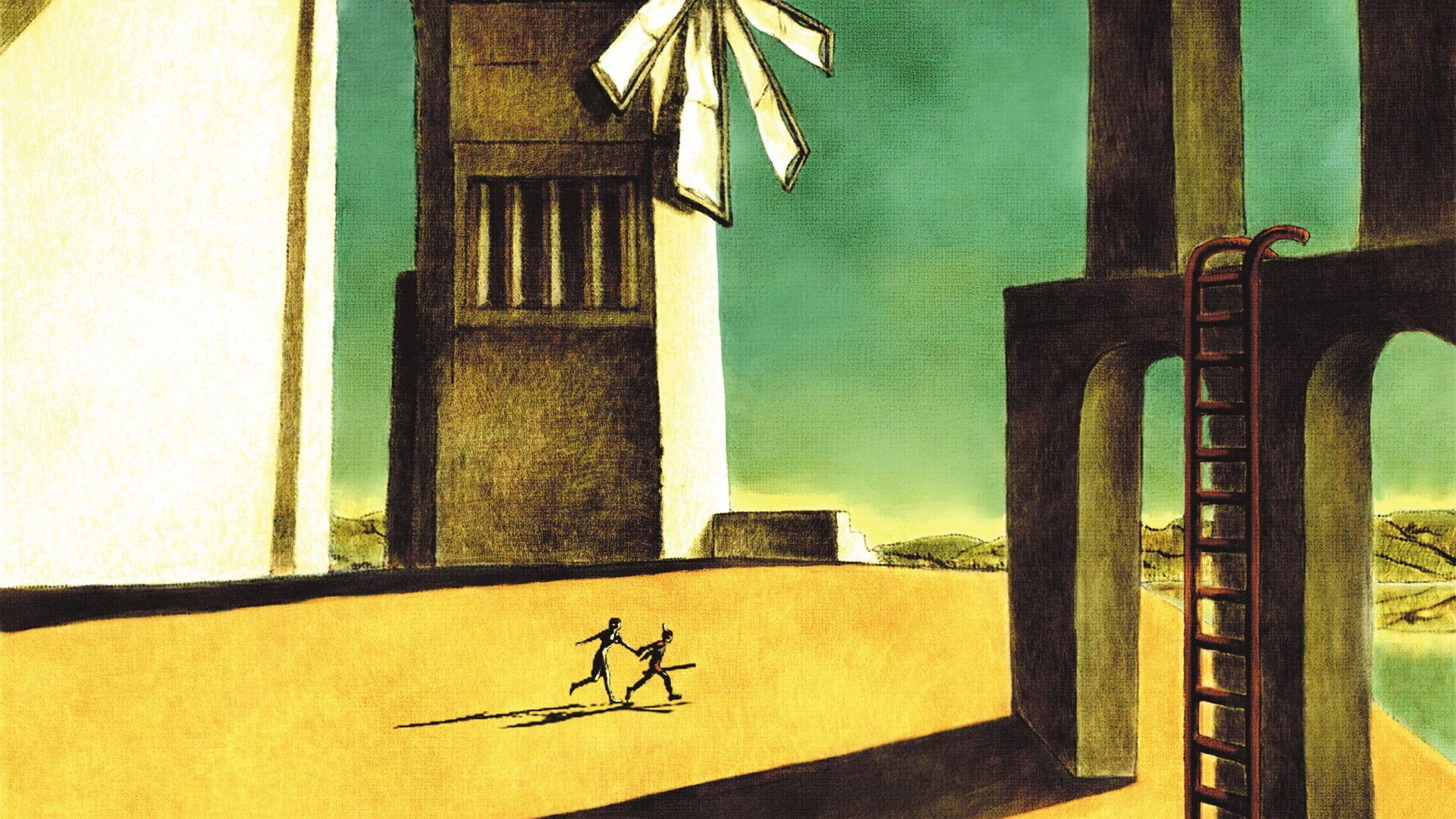
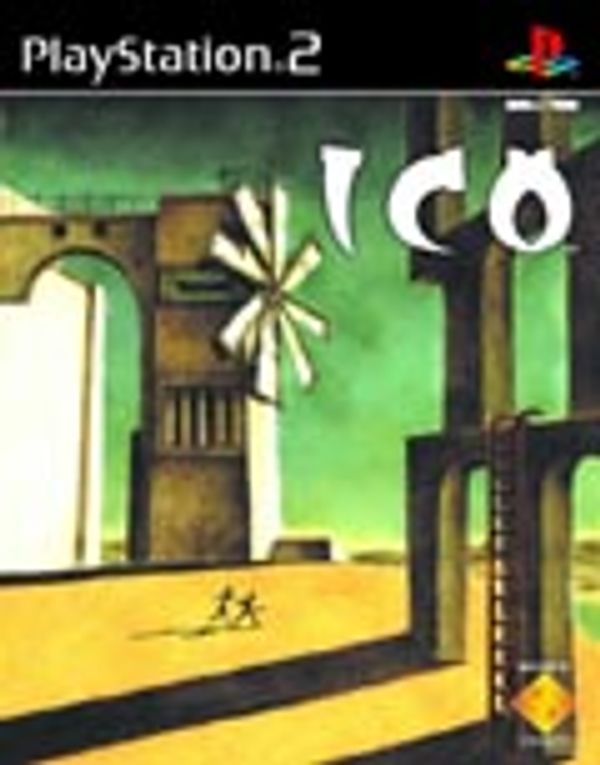
The first PAL edition is particularly recognisable. It came in a cardboard-sleeved digipack and included four postcard-sized art cards. The European build also used a DVD-ROM, whereas the North American and Japanese PlayStation 2 releases used CD-ROM media. More importantly, the later Japanese and European versions included refinements and second-playthrough extras omitted from the early North American release, including translated versions of Yorda’s dialogue, a local two-player option with a second player controlling Yorda and additional unlockable content. These features were carried into the later European-based HD remaster.
Reception
ICO received strong critical praise, although its small scale and subdued pace made it less immediately accessible than mainstream PlayStation 2 adventures. Metacritic records a 90 out of 100 critic average from 59 reviews. Eurogamer awarded it 10 out of 10, praising its restraint and puzzle design, while GameSpot gave it 8.5 out of 10 and highlighted its visual direction, animation, atmosphere and environmental design.
The reservations were consistent as well as positive. Reviewers noted that a first playthrough could be completed in roughly seven to ten hours, that the combat was basic and that there was little conventional replay value in the North American version. Those limitations were part of the design’s focus, but they also meant ICO was never an uncomplicated recommendation for players looking for a long or mechanically varied adventure.
Legacy and playing it now
ICO became a cult classic rather than a major commercial success, and its reputation grew steadily after release. Its use of sparse dialogue, environmental storytelling, soft lighting, expressive animation and a physically present companion helped establish it as a frequent example in discussions of games as an art form. It was also commonly cited alongside Shadow of the Colossus, Ueda’s later spiritual successor, as one of the defining works of Team Ico.
Sony and Bluepoint Games released an HD version in The ICO and Shadow of the Colossus Collection for PlayStation 3 in 2011. The PAL collection launched on 28 September and added high-definition presentation, stereoscopic 3D and Trophy support. That edition used the more complete European version of ICO. The original PS2 disc remains the most direct way to experience the PAL release, while the PS3 collection is the principal official remastered alternative. There is no native PS4 or PS5 version of the game, and modern PlayStation consoles do not accept PS2 discs directly.
Screenshots (09 Oct-2005)
Artwork
Videos
Frequently asked questions
Is the UK PAL version of ICO different from the US version?
Yes. The PAL release contains later revisions and second-playthrough extras omitted from the early North American version, including translated Yorda dialogue and a local two-player mode. The PAL first edition also used the European artwork and came with a cardboard sleeve and four art cards.
Can ICO be played on PS4 or PS5?
Not from the original PS2 disc. The official modern console release is the PlayStation 3 HD collection; PS4 and PS5 do not provide native compatibility for the PS2 version, and there is no native PS4 or PS5 release of ICO.
Is the original PAL copy of ICO rare?
The first PAL edition is collectible because of its cardboard sleeve and four art cards, while the 2006 reprint is generally easier to find. Condition and completeness matter considerably, so there is no single reliable value for a copy.
Does ICO have multiplayer or online play?
It has no online mode. The PAL and Japanese versions include an optional local two-player feature after completing the game, with the second player controlling Yorda, but the main game is designed as a single-player adventure.
How long does ICO take to finish?
A first playthrough commonly takes around seven to ten hours, depending on how quickly its environmental puzzles are solved. The PAL version has additional reasons to replay it, including translated dialogue and the local two-player option.